
- Ordinary passport holders from 50 countries, including the UK, Canada, Australia, Japan, South Korea and most of Europe, can enter China without a visa and stay up to 30 days.
- For 48 of those countries the waiver currently ends at midnight on December 31, 2026. Russia's runs to December 31, 2027, and Brunei's has no end date.
- Not on the list? Check China's mutual visa-exemption agreements (Singapore, Thailand and Malaysia have one), the 240-hour visa-free transit rule, or apply for a visa.
Last checked: Nov 23, 2026, against the National Immigration Administration (NIA), China's Ministry of Foreign Affairs (MFA) and Chinese embassy pages listed under Sources. Entry rules change often, so open the official page again before you book.
On this page
The 50 countries on China's visa-free list
China calls this its unilateral visa-free policy: China waives the visa, whether or not your country does the same for Chinese citizens. It covers ordinary passports only. Diplomatic and service passports fall under separate agreements.
| Region | Countries |
|---|---|
| Europe (35) | Andorra, Austria, Belgium, Bulgaria, Croatia, Cyprus, Denmark, Estonia, Finland, France, Germany, Greece, Hungary, Iceland, Ireland, Italy, Latvia, Liechtenstein, Luxembourg, Malta, Monaco, Montenegro, Netherlands, North Macedonia, Norway, Poland, Portugal, Romania, Russia, Slovakia, Slovenia, Spain, Sweden, Switzerland, United Kingdom |
| Asia (7) | Bahrain, Brunei, Japan, Kuwait, Oman, Saudi Arabia, South Korea |
| Americas (6) | Argentina, Brazil, Canada, Chile, Peru, Uruguay |
| Oceania (2) | Australia, New Zealand |
The United States is not on this list, and neither are the Czech Republic or Lithuania. Citizens of all three can still use the 240-hour transit rule further down. Canada and the UK joined on February 17, 2026. Sweden was added from November 10, 2025.
The December 31, 2026 end date
For 48 of the 50 countries, the waiver is set to end at 24:00 on December 31, 2026. On November 17, 2026, an MFA spokesperson was asked whether it would be extended and said China is "carefully studying" the policy. No decision had been published when we checked.
China has extended this policy before. The MFA notice of November 3, 2025 moved the end date to the close of 2026. That history does not guarantee another extension. If any part of your trip falls in 2027, check the NIA site or the Chinese embassy in your country shortly before you fly.
The official pages do not say how a stay that starts in late December and runs into January will be treated. If that is your plan, ask the embassy in writing.
Which trips the waiver covers
Five purposes qualify: business, tourism, visiting family or friends, exchange visits and transit. The embassy FAQ adds sports competitions, conferences and exhibitions, and study tours such as summer or winter camps, as long as the stay is 30 days or less.
Work, study and news reporting are not covered. You need the matching visa for those.
- It works for tour groups and independent travelers alike.
- Children follow the same rules as adults.
- You can fly in from any country, not only your own.
- It applies at every air, sea and land port open to foreigners, unless a specific rule says otherwise.
- You can use it more than once. The embassy FAQ says there is currently no limit on the number of entries or total days.
- You do not need to register with an embassy before you travel.
How the 30 days are counted
The count starts at 00:00 on the day after you enter and runs for 30 calendar days. Arrive on March 1 and day one is March 2, so you must leave by the end of March 31.
Planning more than 30 days? Apply for a visa before you go. If you are already in China on the waiver and have a valid reason to stay longer, apply for a stay permit at the local public security exit-entry office before your 30 days run out.
What to have ready at the border
- An ordinary passport valid for your whole stay. Travel documents, temporary passports and emergency passports do not qualify for visa-free entry.
- Proof of your trip. The embassy FAQ suggests carrying your flight tickets, hotel bookings or an invitation letter that match your stated purpose.
- An arrival card. Since November 20, 2025 you can fill it in online before you fly, on the NIA website (s.nia.gov.cn/ArrivalCardFillingPC/), the "NIA 12367" app, or the NIA mini programs in WeChat and Alipay. You can also do it at the airport by QR code, kiosk or paper card.
The online arrival card is free. The NIA has warned about fake websites that charge for it. Use only the official channels above.
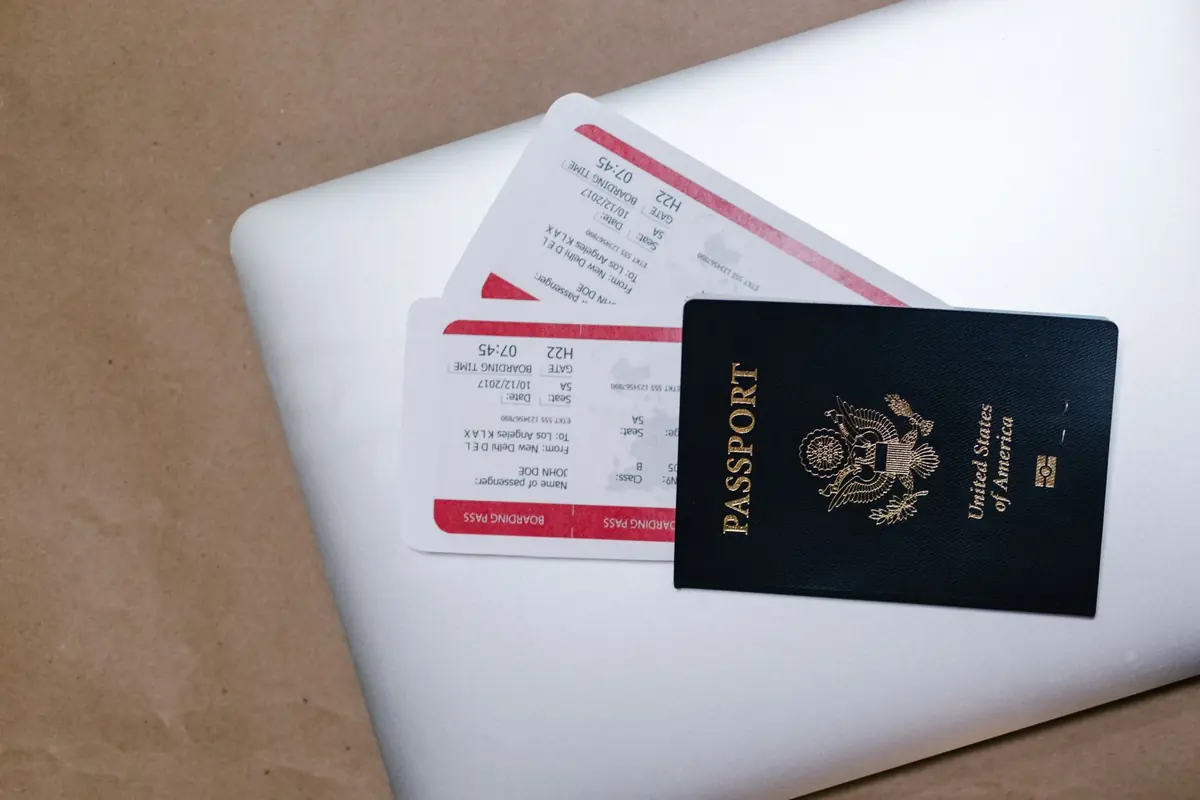
Border officers make the final decision. If your purpose does not match the waiver, they can refuse entry.
Countries with a mutual visa-exemption agreement
A second group enters visa-free under two-way treaties. The China Consular Service table (updated to May 29, 2026) lists agreements that cover ordinary passports with these countries:
- Asia and the Gulf: Singapore, Thailand, Malaysia, the United Arab Emirates, Qatar, the Maldives
- Central Asia and the Caucasus: Kazakhstan, Uzbekistan, Georgia, Azerbaijan, Armenia
- Europe: Serbia, Bosnia and Herzegovina, Albania, Belarus, San Marino
- Africa, the Pacific and the Americas: Mauritius, Seychelles, Fiji, Tonga, Samoa, Solomon Islands, the Bahamas, Barbados, Dominica, Grenada, Antigua and Barbuda, Suriname
The terms come from each treaty. The consular table says a stay is generally no more than 30 days per entry. Thailand and Malaysia also cap visits at 90 days in any 180, and Malaysia's agreement asks for a passport valid for at least six months. Check your own country's terms with the Chinese embassy before you go.

Not on either list: your other options
- Passing through240-hour visa-free transit57 countries, including the US. You need an ordinary passport and a confirmed onward ticket to a third country or region. Enter at one of 65 ports and stay up to 10 days in the permitted area.
- Hainan only30 days in HainanCitizens of 61 countries can enter through Hainan's ports and stay up to 30 days within Hainan Province.
- Everyone elseApply for a visaApply at a Chinese embassy, consulate or visa application service center before you travel.
There is also a 24-hour direct transit rule for all nationalities, as long as you hold an onward ticket and stay in the airport's restricted area. Leaving that area requires a temporary entry permit from the border officers at the port.
The transit list changes too. Kyrgyzstan and Vietnam were added on August 20, 2026, which took it to 57 countries. The NIA transit page lists the ports and the areas you may visit from each.

FAQ
Do US citizens need a visa for China?
For a normal trip, yes. The US is not on the 30-day visa-free list. US passport holders can use the 240-hour transit rule if they fly on to a third country or region.
Can I leave China and come back on a new 30 days?
The embassy FAQ says eligible travelers can use the waiver repeatedly, with no current limit on entries or total days. What you do in China must still match a visa-free purpose.
Does my child need anything different?
No. Minors follow the same visa-free rules as adults and need their own ordinary passport.
Can I extend a visa-free stay?
Only for a valid reason, by applying for a stay permit at the local public security exit-entry office before day 30. For longer trips, get a visa before you travel.
Is the 30-day waiver the same as the 240-hour transit rule?
No. The 240-hour rule needs a confirmed onward ticket to a third country or region and keeps you inside the permitted area for your port. The official conditions for the 30-day waiver list neither of these. They ask for a qualifying ordinary passport and a qualifying purpose.
Sources
- NIA: List of Countries Covered by Unilateral Visa Exemption Policies (as of Feb 17, 2026); Chinese version
- Chinese Embassy in Switzerland: FAQs on Visa-free Entry into China (Aug 19, 2026)
- MFA: Notice on extending the unilateral visa-free policy (Nov 3, 2025, Chinese)
- MFA: Visa-free policy for Canada and the UK (Feb 15, 2026, Chinese)
- MFA: Regular press conference, Nov 17, 2026 (Chinese)
- China Consular Service: Table of mutual visa-exemption agreements (updated to May 29, 2026, Chinese)
- MFA: China–Singapore mutual visa exemption, China–Thailand, and Chinese Embassy in Malaysia FAQ (Chinese)
- NIA: Visa-Free Transit Policies (Aug 20, 2026)
- NIA Announcement No. 4 of 2026: Kyrgyzstan and Vietnam added to 240-hour transit and Hainan 30-day entry (Chinese)
- NIA: Beware of Fraudulent Websites for Arrival Card Filling (Dec 5, 2025)