
- Citizens of 57 countries, including the US, UK, Canada, Australia, Japan and most of Europe, can stay in mainland China for up to 240 hours (10 days) without a visa if they are passing through to a third country or region.
- You need an ordinary passport valid for at least 3 months and an onward ticket with a confirmed date and seat, and you must enter at one of 65 designated ports.
- The 240 hours start at 00:00 on the day after you arrive, and you must stay inside the permitted areas of 24 provinces.
Last checked: Nov 23, 2026, against the National Immigration Administration (NIA) transit page dated Aug 20, 2026, NIA announcements and city government pages listed under Sources. The country list changed twice in the past year, so check it again before you book.
On this page
The 57 countries that can use 240-hour transit
The list is longer than the 30-day visa-free list, and it includes the United States. It covers ordinary passports only.
| Region | Countries |
|---|---|
| Europe (40) | Albania, Austria, Belarus, Belgium, Bosnia and Herzegovina, Bulgaria, Croatia, Cyprus, Czech Republic, Denmark, Estonia, Finland, France, Germany, Greece, Hungary, Iceland, Ireland, Italy, Latvia, Lithuania, Luxembourg, Malta, Monaco, Montenegro, Netherlands, North Macedonia, Norway, Poland, Portugal, Romania, Russia, Serbia, Slovakia, Slovenia, Spain, Sweden, Switzerland, Ukraine, United Kingdom |
| North America (2) | Canada, United States |
| South America (4) | Argentina, Brazil, Chile, Mexico |
| Oceania (2) | Australia, New Zealand |
| Asia (9) | Brunei, Indonesia, Japan, Kyrgyzstan, Qatar, Singapore, South Korea, United Arab Emirates, Vietnam |
Many of these countries are also on China's 30-day visa-free list. If yours is on both, the 30-day rule is usually simpler, because it does not ask for an onward ticket to a third place. The US, the Czech Republic, Lithuania, Mexico and Indonesia are examples of countries that have the transit rule but not the 30-day waiver.
The third-country rule: A to China to B
Your next stop after China must be a different country or region from the one you flew in from. The NIA calls this transit "to third countries or regions".
| Route | Fits the rule? |
|---|---|
| London → Shanghai → Tokyo | Yes. Arrive from the UK, leave for Japan. |
| Los Angeles → Beijing → Seoul | Yes. Arrive from the US, leave for South Korea. |
| Seoul → Shanghai → Seoul | No. You leave for the place you came from. |
| Toronto → Hong Kong → Shenzhen → Bangkok | Yes. MTR, which runs Hong Kong's high-speed rail, gives this route as its example. |
Hong Kong, Macao and Taiwan can be your onward destination. The MTR notice says so directly and adds that the destination "must be different from the departure country or region". The NIA pages use the phrase "third countries or regions" without naming them. If your plan depends on this point, ask the NIA hotline 12367 (+86 12367 from abroad) before you book.
What you need at the border
There is no application before you travel. You apply at the border, and the officers there decide.
- An ordinary passport from one of the 57 countries, valid for at least 3 months. You must also meet the entry rules of your next country or region, for example a visa if it needs one.
- An onward ticket by air, sea or rail, with a confirmed date and seat, leaving mainland China within 240 hours. The NIA also accepts "related proof" of the onward trip.
- An arrival card, filled in online before you fly (free on the NIA website, the "NIA 12367" app or its WeChat and Alipay mini programs) or at the port.
- Time for questions. The border officers check your documents and can ask about your plans before they issue a temporary entry permit.

The permit covers tourism, business trips and visiting family or friends. Work, study and news reporting need a visa approved in advance.
How the 240 hours are counted
The clock starts at 00:00 on the day after you enter, not at the moment you land. The NIA and the Shanghai and Beijing border authorities all use this rule.
Example: you land in Shanghai at 15:00 on March 1. The 240 hours run from 00:00 on March 2 to 24:00 on March 11. Your onward flight, train or ship must leave before that.
The day you arrive is free, so a late-evening arrival does not cost you hours. Book the onward ticket inside the window before you fly, because the officers check its date at entry.
The 65 entry ports and where you may travel
You must enter through one of 65 ports in 24 provinces and municipalities. After entry you can move between provinces, as long as you stay inside the permitted areas, and you can leave from any port that applies the policy.
| Province or city | Entry ports | Permitted area |
|---|---|---|
| Beijing | Capital Airport, Daxing Airport | Beijing |
| Tianjin | Binhai Airport, Tianjin Port | Tianjin |
| Hebei | Shijiazhuang Zhengding Airport, Qinhuangdao Port | Hebei Province |
| Liaoning | Shenyang Taoxian Airport, Dalian Zhoushuizi Airport, Dalian Port | Liaoning Province |
| Shanghai | Pudong Airport, Hongqiao Airport, Shanghai Port | Shanghai |
| Jiangsu | Nanjing Lukou, Sunan Shuofang (Wuxi), Yangzhou Taizhou airports, Lianyungang Port | Jiangsu Province |
| Zhejiang | Hangzhou Xiaoshan, Ningbo Lishe, Wenzhou Longwan, Yiwu airports, Wenzhou Port, Zhoushan Port | Zhejiang Province |
| Anhui | Hefei Xinqiao Airport, Huangshan Tunxi Airport | Anhui Province |
| Fujian | Fuzhou Changle, Xiamen Gaoqi, Quanzhou Jinjiang, Wuyishan airports, Xiamen Port | Fujian Province |
| Shandong | Jinan Yaoqiang, Qingdao Jiaodong, Yantai Penglai, Weihai Dashuipo airports, Qingdao Port | Shandong Province |
| Henan | Zhengzhou Xinzheng Airport | Henan Province |
| Hubei | Wuhan Tianhe Airport | Hubei Province |
| Hunan | Changsha Huanghua Airport, Zhangjiajie Hehua Airport | Hunan Province |
| Guangdong | Guangzhou Baiyun, Shenzhen Bao'an, Jieyang Chaoshan airports; Nansha, Shekou, Guangzhou Pazhou and Zhongshan ports; Hengqin; Hong Kong-Zhuhai-Macao Bridge; West Kowloon Station (high-speed rail) | Guangdong Province, exit at any open port in the province |
| Hainan | Haikou Meilan Airport, Sanya Phoenix Airport | Hainan Province |
| Chongqing | Jiangbei Airport | Chongqing |
| Guizhou | Guiyang Longdongbao Airport | Guizhou Province |
| Shaanxi | Xi'an Xianyang Airport | Shaanxi Province |
| Shanxi | Taiyuan Wusu Airport | Taiyuan and Datong only |
| Heilongjiang | Harbin Taiping Airport | Harbin only |
| Jiangxi | Nanchang Changbei Airport | Nanchang and Jingdezhen only |
| Guangxi | Nanning Wuxu, Guilin Liangjiang, Beihai Fucheng airports, Beihai Port | 12 cities: Nanning, Liuzhou, Guilin, Wuzhou, Beihai, Fangchenggang, Qinzhou, Guigang, Yulin, Hezhou, Hechi, Laibin |
| Sichuan | Chengdu Shuangliu Airport, Chengdu Tianfu Airport | 11 cities: Chengdu, Zigong, Luzhou, Deyang, Suining, Neijiang, Leshan, Yibin, Ya'an, Meishan, Ziyang |
| Yunnan | Kunming Changshui Airport, Lijiang Sanyi Airport, Mohan Railway Port | 9 cities and prefectures: Kunming, Yuxi, Chuxiong, Honghe, Wenshan, Pu'er, Xishuangbanna, Dali, Lijiang |

Watch the three provinces where only some cities are open. Arriving in Taiyuan does not let you visit the rest of Shanxi, and Chengdu arrivals are limited to the 11 Sichuan cities in the table.
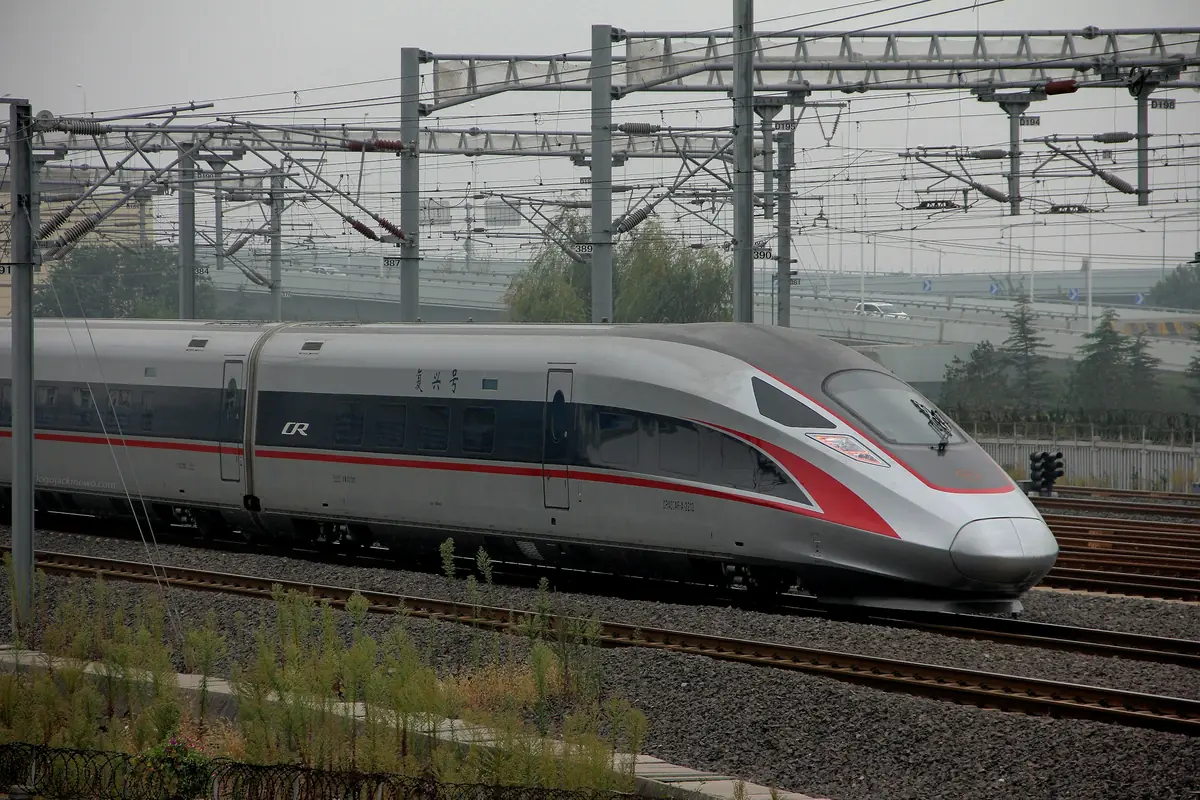
Cross-province trips work within the permitted areas. Fly into Beijing, take the train to Xi'an (Shaanxi is on the list), and leave from Shanghai, all on one 240-hour permit.
Using 240-hour transit, step by step
- Check your passport against the 57-country list and its expiry date (3 months or more).
- Plan the route so you arrive from one country or region and leave for another, through ports in the table.
- Book the onward ticket first, with a confirmed seat and a departure inside the 240-hour window. Keep it on paper and on your phone.
- Fill in the arrival card online through a free NIA channel.
- At the border, say you are applying for 240-hour visa-free transit. Hand over your passport and onward ticket, with the arrival card done. If approved, you get a temporary entry permit. MTR asks rail travelers at West Kowloon to allow extra time, because approval is done on the spot.
- Register where you stay. Hotels do it when you check in with your passport. In a private home, you or your host register at the local police station within 24 hours.
- Leave on time from any port that applies the policy, before 24:00 on your last day.

240-hour transit, 24-hour transit or the 30-day waiver
| 240-hour transit | 30-day visa-free | 24-hour direct transit | |
|---|---|---|---|
| Who | 57 countries | 50 countries | All nationalities |
| Longest stay | 240 hours | 30 days | 24 hours |
| Onward ticket to a third place | Required | Not in the official conditions | Required |
| Where you can go | Permitted areas of 24 provinces | Not tied to a port area | The airport's restricted area |
| Entry points | 65 designated ports | Ports open to foreigners | Any open port |
The 24-hour rule is for changing planes. Since Nov 5, 2025, passengers with a connecting international ticket within 24 hours can transfer without border inspection procedures at 10 more airports, including Chongqing Jiangbei, Kunming Changshui and Wuhan Tianhe. Leaving the restricted area needs a temporary entry permit.
FAQ
Can US citizens use 240-hour transit?
Yes. The United States is on the 57-country list. You need an ordinary passport valid for 3 months or more and an onward ticket to a third country or region.
Can I fly home to the country I came from?
No. The onward ticket must go to a different country or region from the one you arrived from. A round trip such as Seoul to Shanghai and back does not qualify.
Can I enter in Beijing and leave from Shanghai?
Yes. After entry you can travel between the permitted areas, and you can leave from any port that applies the policy.
Can I visit Hong Kong in the middle of my 240 hours?
Crossing into Hong Kong is an exit from the mainland. The official pages do not describe coming back on the same permit, so plan the return as a new entry and check it with the 12367 hotline first.
What if my plans change or a flight is cancelled?
The official pages do not cover this. Call the NIA hotline 12367 (+86 12367 from abroad) or go to the local exit-entry office before your time runs out.
Do I need to apply online before I fly?
No. You apply at the border on arrival. The only online step is the free arrival card.
Sources
- NIA: Visa-Free Transit Policies (Aug 20, 2026), including the table of 65 ports and permitted stay areas
- NIA Announcement No. 4 of 2026: Kyrgyzstan and Vietnam added (Aug 20, 2026, Chinese)
- NIA Announcement No. 4 of 2025: conditions for 240-hour transit, five new Guangdong ports, 24-hour transit airports, online arrival card (Nov 3, 2025, Chinese)
- Shanghai government FAQ: How the 240-hour stay is calculated (Shanghai Exit-Entry Border Inspection General Station)
- Beijing government FAQ: Requirements for 240-hour visa-free transit
- MTR High Speed Rail: 240-hour visa-free transit (onward destinations, West Kowloon)
- Beijing government: Residence registration after entry into China